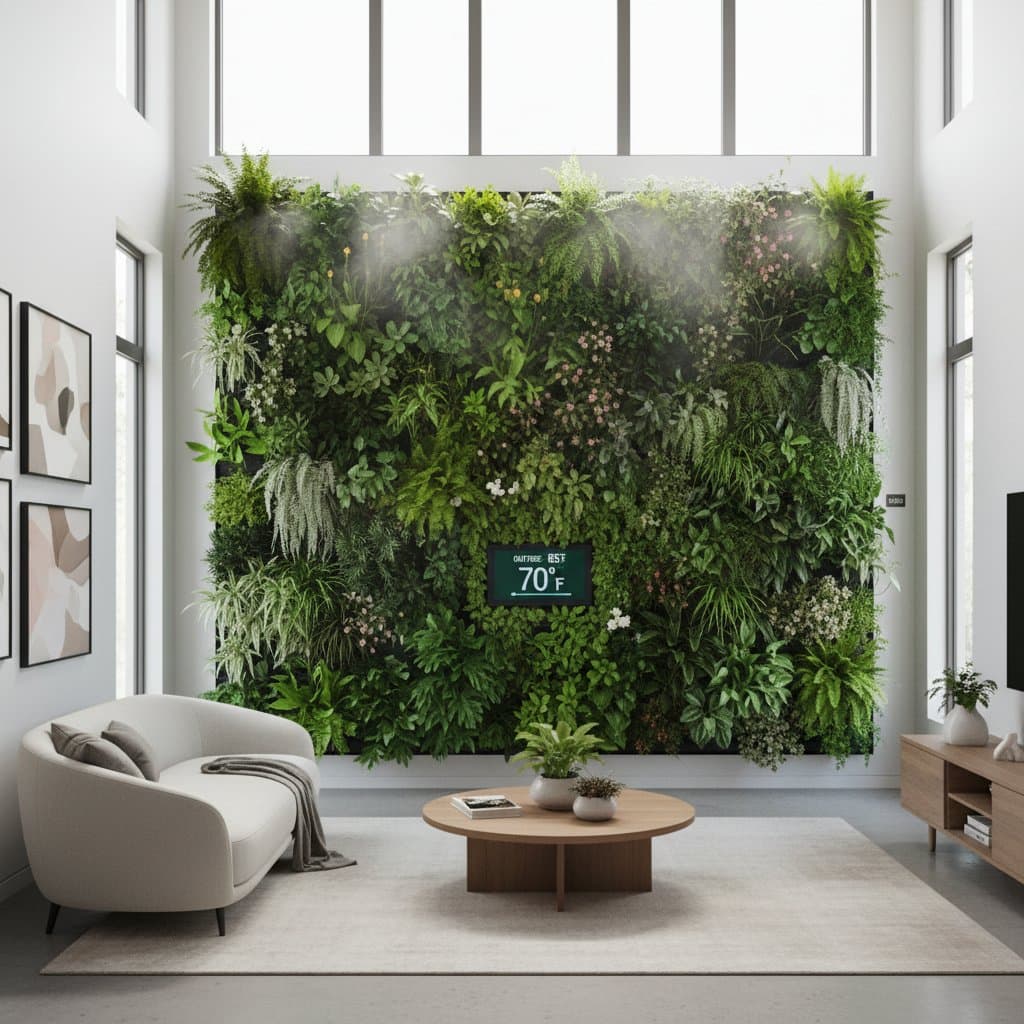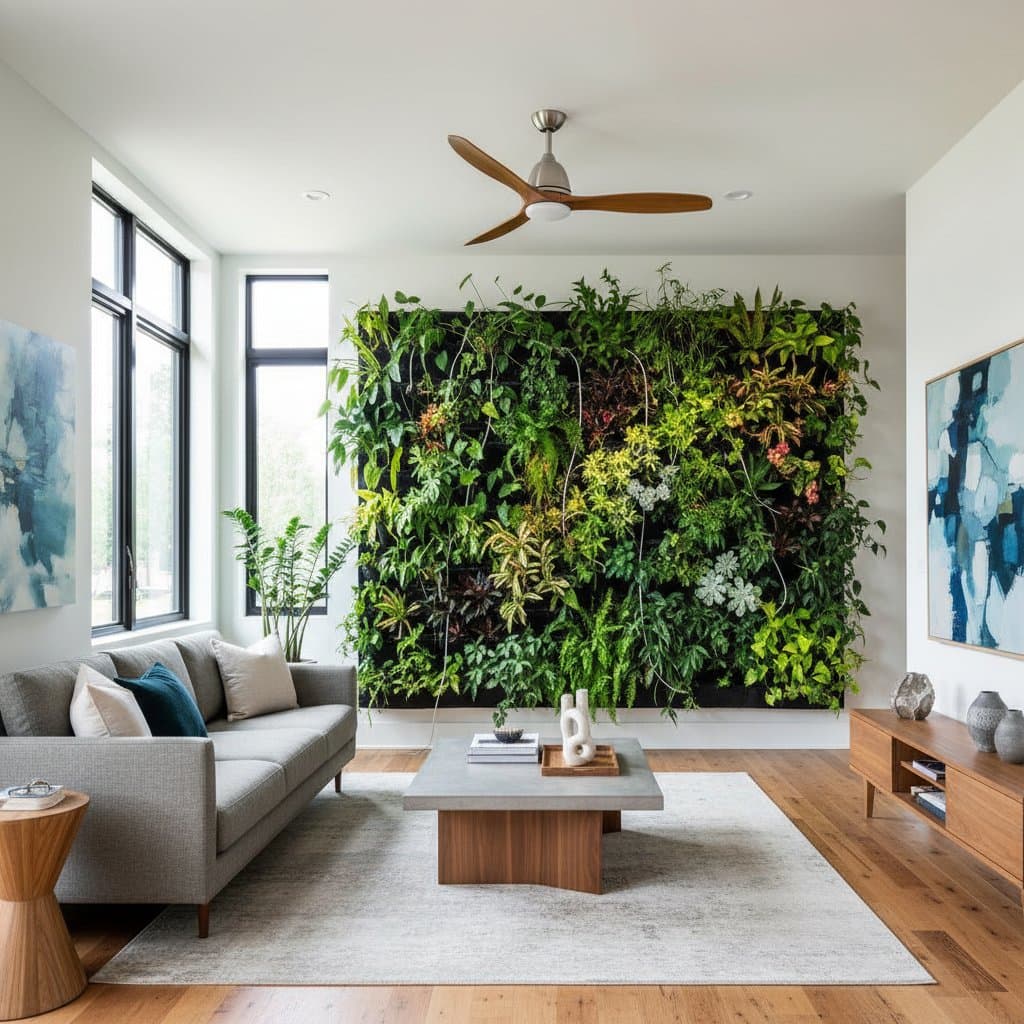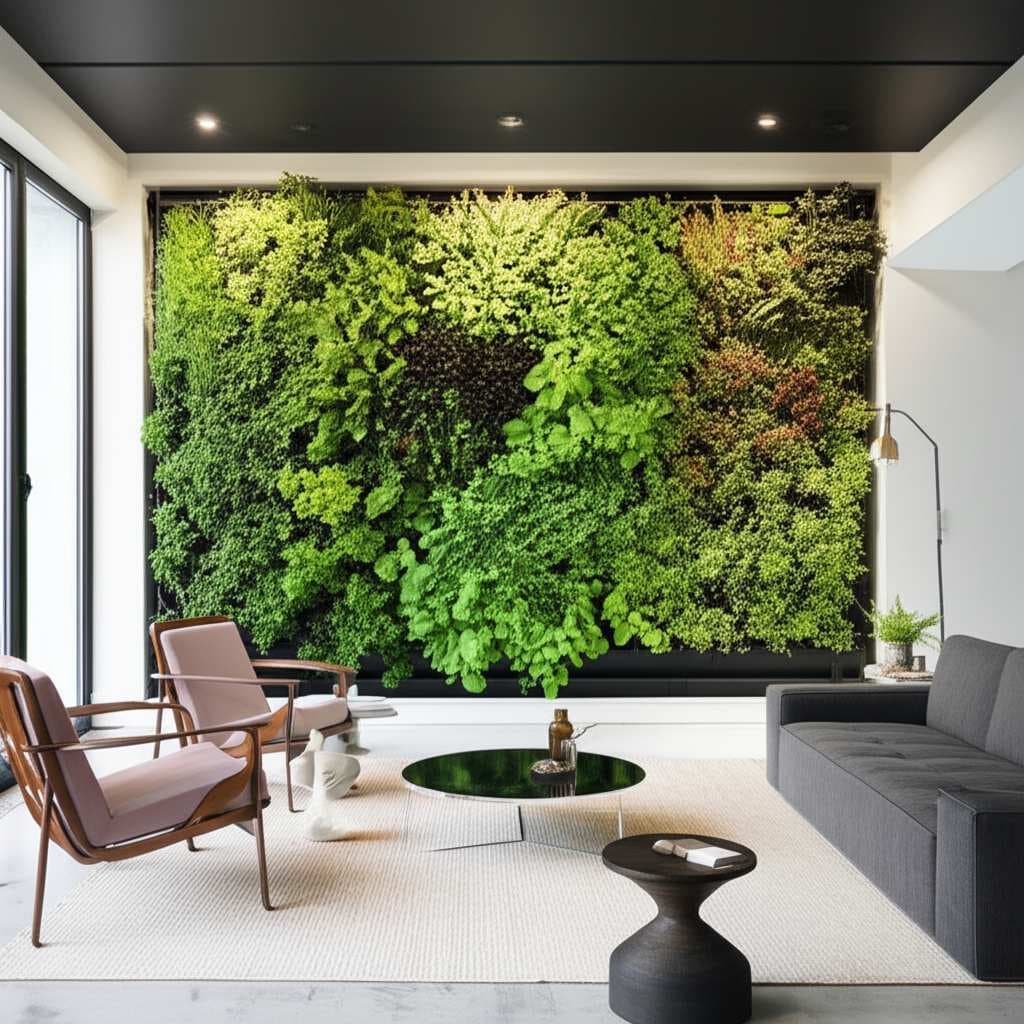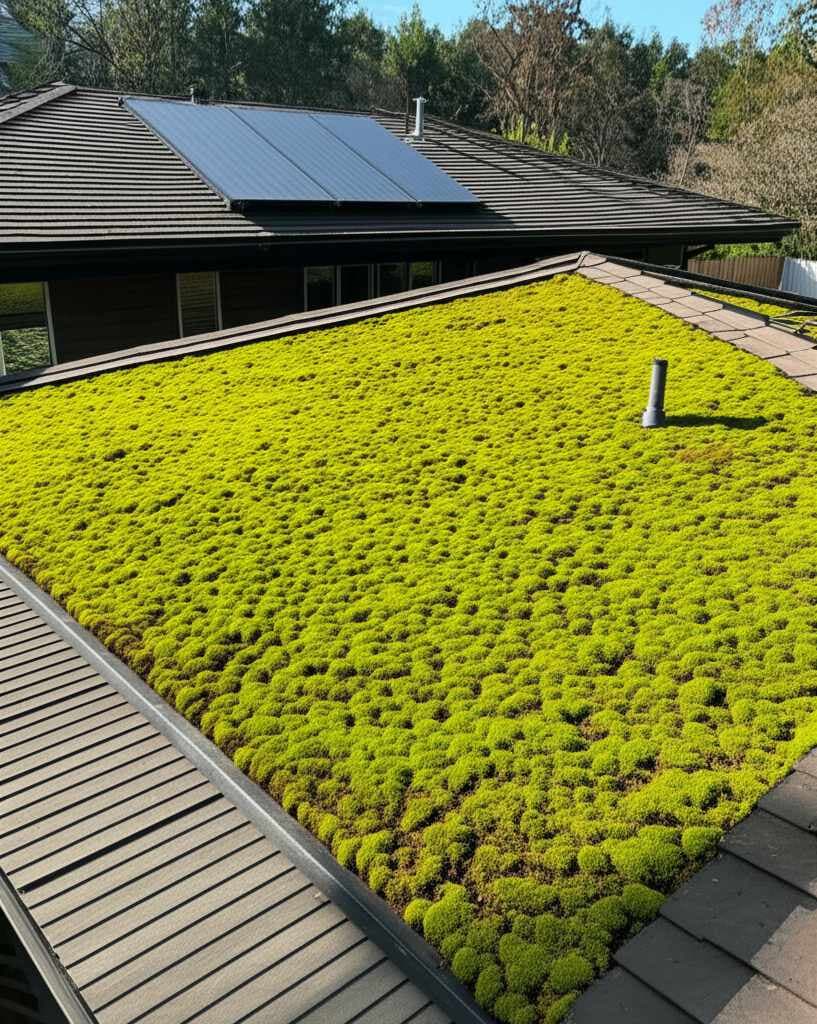
- Drainage: Proper drainage prevents stagnation and root rot, with channels directing excess water away from foundations.
- Plant Establishment: Initial growth period typically lasts eight to twelve weeks before achieving full coverage, during which supplemental lighting may assist.
Homeowners should choose systems certified for residential use, ensuring compatibility with local climates. Professional installation guarantees secure attachment and optimal orientation toward the sun.
Maintenance Essentials
Ongoing care keeps living walls thriving and efficient. Regular pruning removes dead foliage, while fertilizing every four to six weeks supports healthy growth. Periodic inspections of irrigation components detect leaks or blockages early.
Most advanced systems incorporate smart sensors that monitor soil moisture and nutrient levels, automating adjustments to watering schedules. This technology reduces manual effort significantly. The average homeowner allocates $500 to $1,000 annually for maintenance, a figure that energy savings quickly offset.
Economic and Environmental Returns
Living walls extend value far beyond immediate cooling. Analysis of residential projects by the National Green Building Research Center reveals substantial gains. Homes featuring vertical greenery achieve 12 to 18 percent return on investment within five years, driven by energy reductions and elevated property values.
Additional advantages include a 20 to 30 percent extension in exterior wall lifespan, as plants shield surfaces from UV radiation and thermal expansion. Indoor air quality improves markedly, with decreases in carbon dioxide and volatile organic compounds by up to 15 percent.
Environmental consultant Dana Li notes, "The real value lies in combining energy efficiency with ecosystem services. Living walls reduce runoff, filter airborne dust, and provide habitats for pollinators even in dense neighborhoods."
These walls also combat the urban heat island effect. When multiple homes on a street incorporate vertical greenery, neighborhood temperatures fall by two to four degrees, easing overall energy demands on local grids.
Comparing Long-Term Savings
| Metric | Standard Wall | Living Wall |
|---|---|---|
| Average Cooling Cost per Season | $600 | $450 |
| Maintenance and Water Costs | $0 | $150 |
| Net Annual Savings | $0 | $150 |
| Payback Period | N/A | 6 to 8 years |
Initial costs range from $10,000 to $20,000 depending on wall size, yet savings accelerate in regions with high electricity rates. Property appraisals often reflect a 5 to 10 percent value increase due to enhanced curb appeal and eco-features.
Integrating Living Walls with Other Cooling Strategies
Pairing living walls with passive cooling methods amplifies their impact. Reflective roofing materials bounce sunlight away, while ventilated façades allow air circulation behind the greenery. Shade trees positioned nearby provide additional layers of protection.
Consider these combinations:
- A southwest-facing living wall with a white reflective roof reduces total heat gain by nearly 40 percent.
- Permeable paving around the base extends evaporative cooling to patios and walkways.
- Smart home systems sync irrigation and shading with weather data for peak efficiency.
Architectural sustainability consultant Priya Desai states, "When vertical greenery becomes part of a holistic design strategy, the house essentially breathes. It moderates its own temperature instead of constantly relying on mechanical systems."
Overcoming Common Challenges
Potential hurdles with living walls include drainage failures, plant die-off from excessive sun, and irrigation clogs from hard water minerals. Addressing these requires thoughtful planning from the outset.
Implement these strategies:
- Install high-quality filtration for irrigation water to avoid deposits.
- Choose regionally appropriate plants suited to local sunlight and humidity.
- Arrange biannual professional inspections to assess structure and performance.
Homeowners following such protocols experience minimal disruptions and systems lasting 15 to 20 years. Many installers offer maintenance contracts covering monitoring and adjustments.
Experiencing the Benefits Daily
Established living walls alter home life profoundly. Indoor spaces feel fresher, with cooler air near green façades during hot afternoons. Vegetation dampens external noises, creating quieter interiors.
Interior designer Amara Chen reports, "Clients describe their homes as calmer after installing living walls. The combination of lower temperatures, reduced noise, and visual greenery contributes to overall well-being." Research in environmental psychology links such features to better mood and lower stress.
Steps to Install Your Living Wall
Begin with a site evaluation to identify the sunniest wall for maximum cooling. Review local regulations and engage a structural engineer to confirm load-bearing capacity. Collaborate with a landscape specialist experienced in vertical systems to select plants and design the layout.
Budget for installation alongside potential incentives like green building rebates. Track progress during the establishment phase, ensuring consistent watering. Within months, enjoy the rewards of a cooler, more vibrant home.