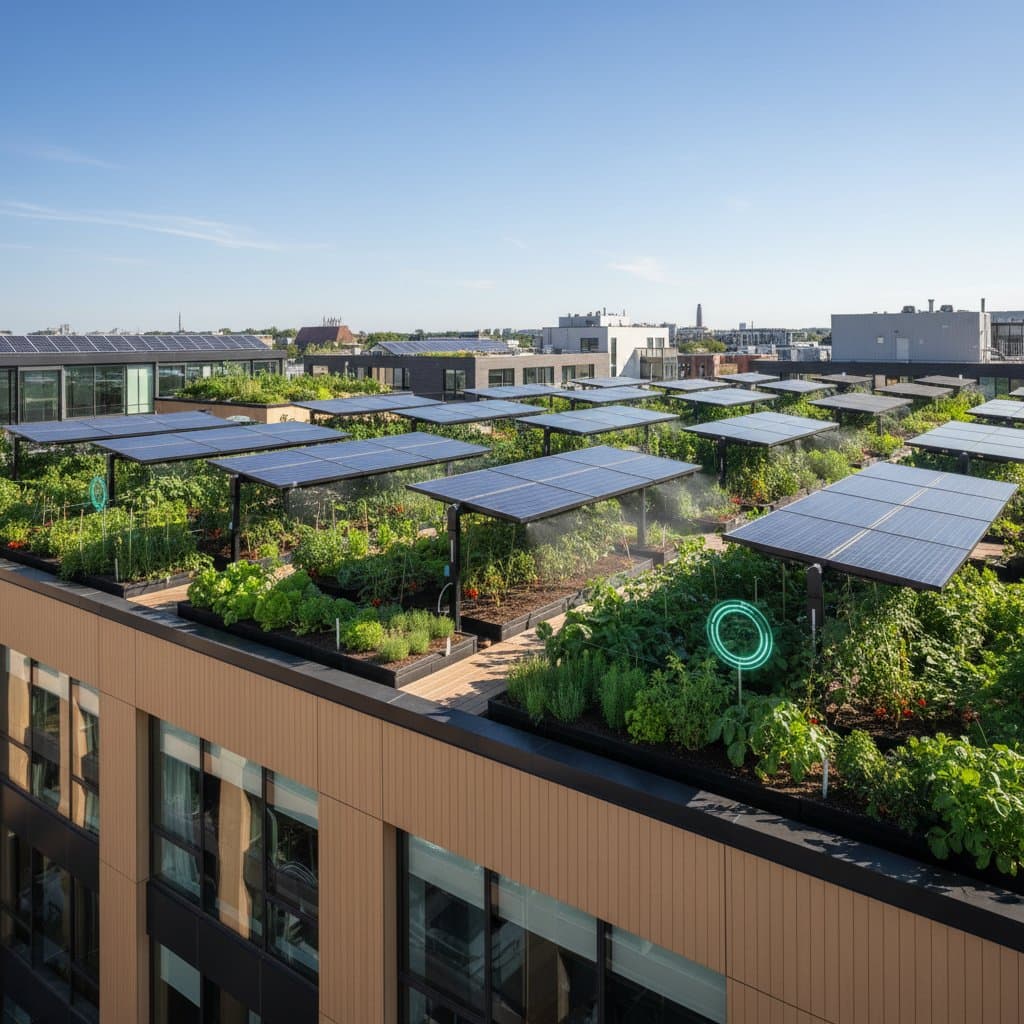
Picture a Rooftop That Works Twice as Hard
As a green building expert, I have observed numerous homeowners and urban developers grapple with choices between solar panel installations and productive green areas. Consider the possibility of achieving both. Envision a rooftop where leafy greens thrive in raised beds under a framework of solar panels. The surrounding air maintains a cooler temperature, pollinators move among the plants, and the structure generates clean energy while supplying herbs for daily meals.
This approach, termed agrivoltaic roofing, reshapes perspectives on urban sustainability. It converts underutilized roof areas into dynamic ecosystems that harness sunlight for electricity and plant growth. Property owners secure food, power, and thermal comfort from identical surface areas.
The Problem and the Opportunity
Urban environments confront two pressing issues: constrained areas for food cultivation and elevated rooftop temperatures that burden cooling infrastructure. Research indicates that roof surfaces can exceed surrounding air temperatures by up to 60 degrees during peak afternoon heat, leading to increased energy consumption and accelerated material wear. At the same time, urban food access challenges persist, with demand growing for locally sourced produce that minimizes transport-related emissions.
Agrivoltaic roofs tackle these concerns directly. The combination of photovoltaic panels and edible landscapes generates shade to moderate building temperatures, mitigate urban heat islands, and foster optimal conditions for vegetation. In various locales, this integration reduces cooling demands by 10 to 20 percent and yields several hundred pounds of produce each year.
How Agrivoltaic Roofs Work
Dual-purpose roofs depend on precise engineering and biological principles. Solar panels mount at a modest elevation above traditional setups, permitting diffused sunlight to reach underlying plants. This arrangement cools the panels through partial shading, which enhances electricity production since lower temperatures improve photovoltaic performance. Crops below gain from stable climates and decreased moisture loss.
The setup operates like a compact ecosystem. Collected rainwater directs to targeted irrigation networks, forming an efficient cycle that conserves resources. Integrated sensors allow monitoring of power generation and harvest volumes via a unified interface.
Expert Tips to Boost Your Home's Eco-Efficiency
Drawing from extensive professional experience, I advise these structured steps for implementing a dual-purpose roof:
-
Assess Structural Strength
Engage a licensed structural engineer to evaluate your roof. Added elements like soil, containers, and water reservoirs increase load. Verify capacity to support solar arrays alongside garden components without compromise. -
Choose Suitable Crops
Opt for shade-tolerant varieties. Leafy options such as kale, spinach, and lettuce excel in these conditions. Aromatic plants like basil and parsley adjust effectively. Steer clear of sun-dependent root crops. -
Plan Smart Irrigation
Deploy drip systems to optimize water delivery and curb excess usage. Incorporate rainwater harvesting where feasible. Sensor-driven automation often achieves reductions in consumption by up to 30 percent. -
Design for Maintenance Access
Incorporate defined pathways amid panels and planting zones. Technicians require unobstructed routes to clean solar surfaces and tend to vegetation without risk. -
Integrate Professional Oversight
Collaborate with certified installers versed in agrivoltaic configurations. Electrical systems and plant care must align seamlessly to guarantee dependable operation.
Practical Considerations for Homeowners
Costs for agrivoltaic roofs fluctuate based on customization levels. Expect $30 to $45 per square foot for comprehensive setups, encompassing durable roofing, containment units, and photovoltaic components. Although initial outlays seem substantial, dual advantages from energy offsets and harvest values facilitate recovery in 8 to 12 years.
Power output holds strong despite shading. Well-engineered designs retain 80 to 90 percent of conventional solar yields and prolong equipment life. The plant cover additionally protects underlying surfaces from ultraviolet exposure, potentially extending roof longevity by 20 years.
Environmentally, these installations advance broader urban objectives. They diminish runoff during storms, elevate air purity, and support biodiversity through pollinator-friendly zones. Certain local governments provide incentives, including tax reductions or grants, for renewable-integrated green roofs.
Growing the Future of Urban Sustainability
Agrivoltaic roofs suit more than commercial structures; they adapt well to residential properties, particularly in sunny regions with sustainability-focused communities. Transforming overlooked spaces into viable growing areas directly cuts food transport distances and greenhouse gas outputs.
Dr. Lina Ortega, a renewable energy researcher, stated, "Agrivoltaic systems represent the next evolution of urban sustainability. When residents see vegetables growing under solar panels, they understand that technology and ecology can work together naturally."
Homeowners might initiate with scalable modules tailored to current roof designs. Such starter projects deliver notable outcomes. The experience extends beyond practical gains, offering fulfillment in cultivating homegrown items energized by the sun that powers household needs.
Making It Happen
To pursue agrivoltaic roofing, connect with qualified green building specialists via established networks. Schedule assessments covering structural viability, solar potential, and crop suitability. Consult detailed resources on solar-integrated gardens for layout ideas and upkeep routines.
Success hinges on deliberate preparation, robust engineering, and consistent attention. A dual-purpose roof transcends isolated outputs of power or provisions. It elevates a property's role in communal health and ecological balance.
Adopting this method positions your space as an active model of forward-thinking sustainability. Every plant established under the panels marks progress toward a more adaptive tomorrow.