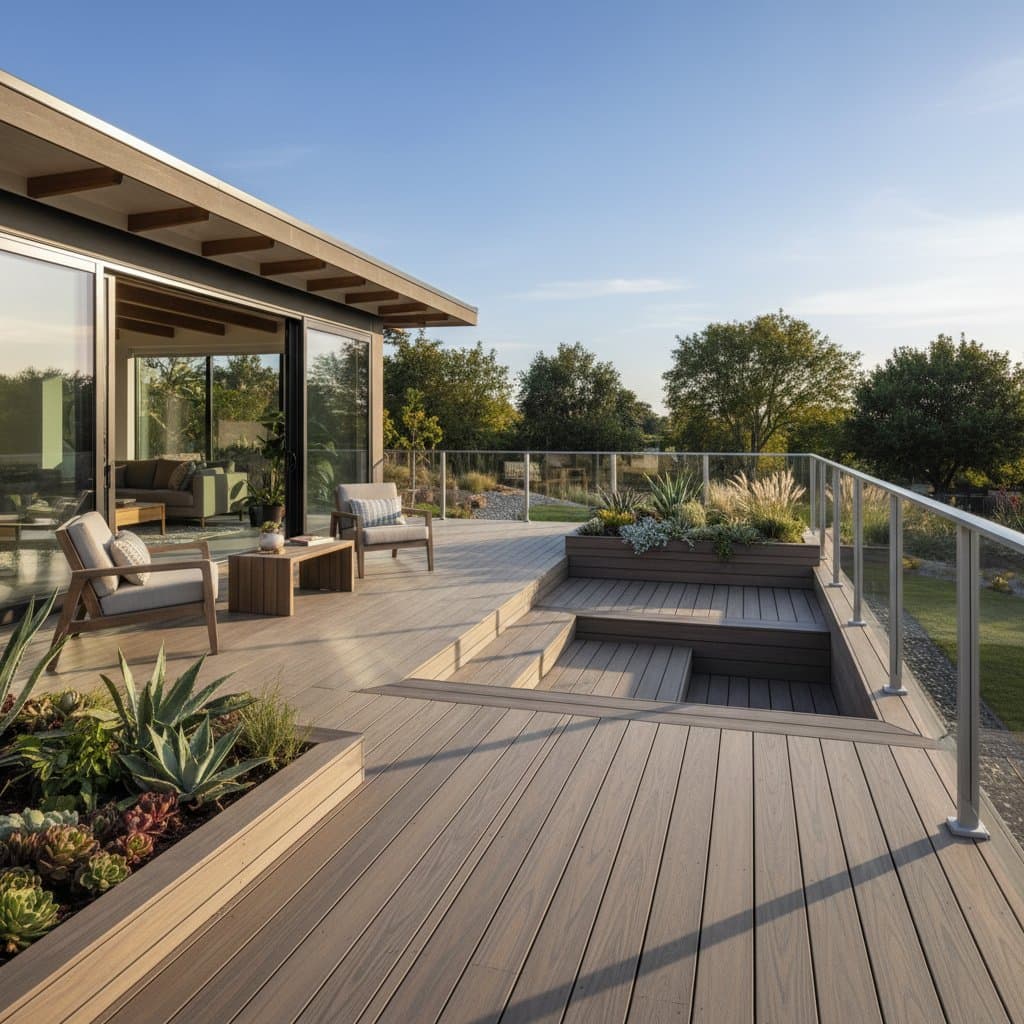
Why Recycled Plastic Lumber Revolutionizes Decks in 2026
Homeowners often envision a backyard deck as a space for relaxation and gatherings, yet traditional wood options frequently lead to ongoing frustrations with upkeep and repairs. Recycled plastic lumber emerges as a transformative solution, providing exceptional longevity, reduced maintenance, and environmental benefits that align with contemporary sustainable living. This material shifts the focus from constant care to enduring enjoyment, making it a cornerstone of modern outdoor design.
Key Advantages
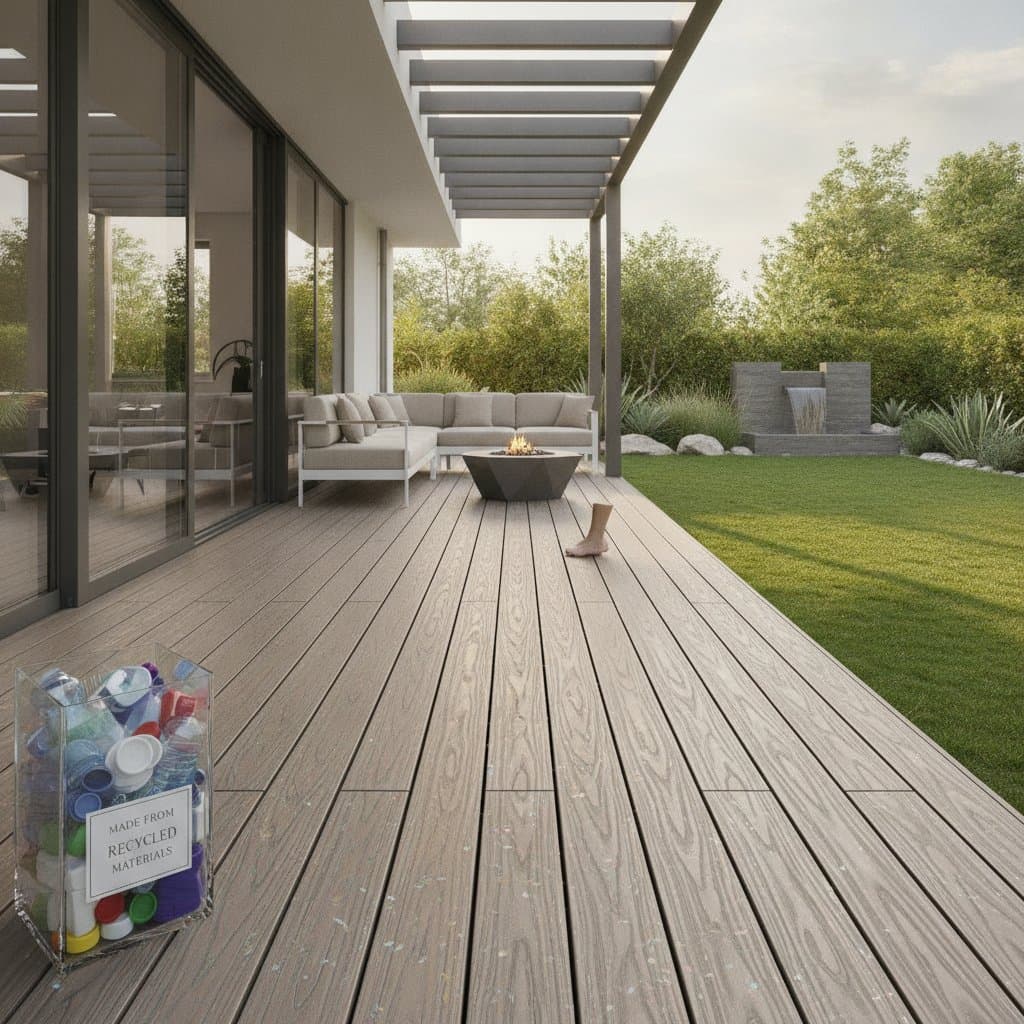
- Recycled plastic lumber derives from post-consumer items like milk jugs, detergent bottles, and packaging films.
- Premium boards endure up to five times longer than conventional wood decking.
- The material withstands rot, insects, and moisture, reducing maintenance expenses by approximately 80 percent.
- Constructing a 500-square-foot deck with this lumber prevents nearly 150,000 plastic bottles from entering landfills.
- Although initial expenses surpass those of pressure-treated wood, lifetime savings frequently reach 25 percent or more.
Understanding Recycled Plastic Lumber
Recycled plastic lumber undergoes a precise process: reclaimed plastics receive thorough cleaning, shredding, and melting to form a solid, consistent product. Distinct from composite decking, which blends wood fibers with plastic, this option consists solely of plastic, granting it unparalleled defense against moisture and biological decay. Producers commonly employ high-density polyethylene, sourced from everyday containers, to achieve robust stability and performance.
Data from the American Plastics Council indicates that incorporating recycled plastic into building projects lowers greenhouse gas emissions by about 65 percent relative to virgin materials. In decking applications, this yields substantial ecological gains while upholding structural reliability. Boards feature molded textures and hues that emulate wood grains, accommodating diverse styles from sleek modern to classic rustic.
Material Comparison
| Material Type | Average Lifespan | Maintenance Needs | Cost per Square Foot | Eco Benefit |
|---|---|---|---|---|
| Pressure-Treated Wood | 10-15 years | High | $3-$5 | Moderate |
| Composite Decking | 20-25 years | Medium | $6-$9 | Good |
| Recycled Plastic Lumber | 40-50 years | Low | $8-$12 | Excellent |
This table highlights the appeal of recycled plastic lumber for discerning builders and homeowners. Higher initial outlays yield superior value through extended service life and negligible ongoing care.
The Durability Science
Wood decking absorbs water, resulting in expansion, cracking, and distortion over seasons. Recycled plastic lumber repels moisture entirely, addressing the primary source of structural failure. Its dense composition also counters ultraviolet rays, preserving both color and integrity amid prolonged solar exposure.
Research from the Building Research Establishment demonstrates that recycled plastic lumber exhibits no significant loss of strength following extended tests in saltwater mist and subzero temperatures. Such fortitude proves ideal for challenging settings like coastal regions or high-humidity zones, where wood deteriorates rapidly. While thermal expansion occurs, specialized fasteners accommodate minor shifts, ensuring long-term stability with correct assembly.
Environmental and Financial Gains
Environmentally, recycled plastic lumber conserves resources: one ton repurposed spares about 16 barrels of oil needed for new resin production. It simultaneously curbs plastic pollution in oceans and landfills, turning each deck into a practical step toward conservation.
Financially, the material delivers compelling returns despite a 20 to 30 percent premium over treated lumber at outset. Savings from eliminated maintenance, sealants, and replacements recoup the difference in five to seven years, with overall costs dropping 25 to 40 percent across the deck's duration.
Practical Case Study
For a 400-square-foot deck, pressure-treated wood installation totals $2,000, plus $200 yearly for cleaning and sealing, accumulating $4,000 over 20 years. A recycled plastic alternative costs $3,600 initially but demands only basic washing, halving total expenses and underscoring its fiscal prudence alongside sustainability.
Aesthetic and Design Flexibility
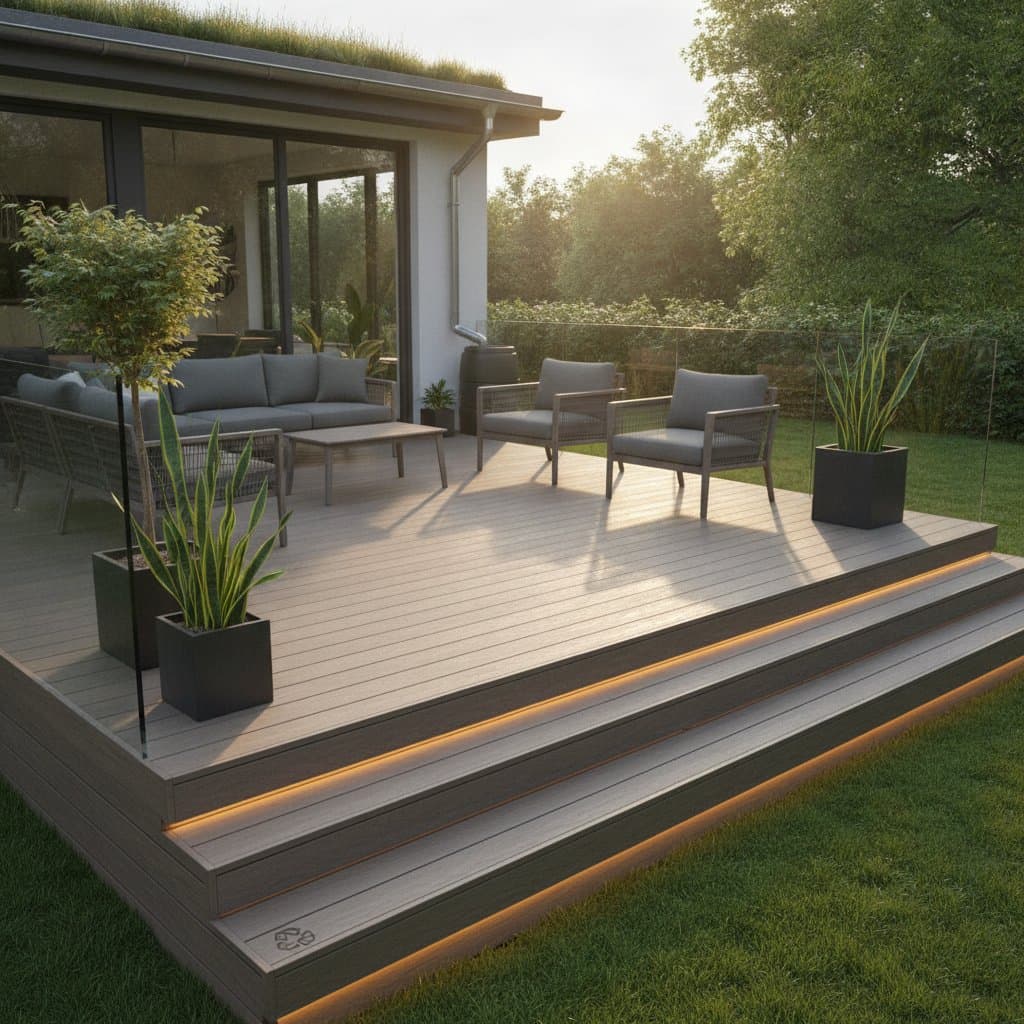
Advancements have overcome past criticisms of unnatural appearance in plastic lumber. Current iterations employ sophisticated texturing to replicate cedar, redwood, or exotic hardwoods, complete with authentic tactile qualities. Integrated pigments ensure colors remain vibrant, free from surface wear or discoloration.
The material supports innovative shaping: heat allows curving for fluid contours and patterns unattainable with wood. Uniform dimensions streamline matching components like railings and treads, minimizing waste and expediting installation to lower labor fees.
Available Finishes
Contemporary options include:
- Woodgrain Textures: Replicate natural surfaces without risks of splinters or distortion.
- Smooth Surfaces: Suit clean, minimalist aesthetics.
- Varied Hues: Span from soft grays to rich browns, with fade-resistant formulations.
- Embossed Designs: Enhance grip in areas prone to moisture, such as near pools.
These choices enable seamless integration with home architecture while upholding eco-principles.
Effortless Upkeep
Recycled plastic lumber demands far less attention than wood alternatives, which require annual treatments to combat water and sun damage. Simple rinsing with a hose or soapy water suffices for cleaning, and the material repels pests like termites without rotting or splintering.
The National Association of Home Builders reports that wood deck owners invest around 40 hours annually in maintenance. Opting for recycled plastic trims this to under 5 hours, allowing more leisure time and proving invaluable for secondary residences or rentals with variable oversight.
Dispelling Common Concerns
Skeptics sometimes cite heat buildup on plastic under sunlight, yet recent additives reflect warmth, cooling surfaces by up to 20 percent. Lighter shades and shade elements further alleviate this.
Strength doubts also arise, but high-density polyethylene with reinforced or foamed interiors rivals or surpasses wood in load support. For demanding spans, combining with aluminum framing bolsters performance.
Rising Adoption and Innovations
Professionals in architecture, construction, and environmental fields increasingly specify recycled plastic lumber for exterior applications. Public projects feature it in boardwalks and seating, while commercial sites incorporate it in elevated decks and promenades. Evolving recycling methods promise cost reductions, broadening residential access.
Forward-thinking producers pursue full circularity: retrieving used lumber for remelting into fresh stock. This approach positions decking as a pinnacle of sustainable construction.
Insights from Experts
Industry leaders note that recycled plastic lumber not only meets but exceeds performance benchmarks, fostering a greener built environment.
Steps to Create Your Lasting Deck
Achieve optimal results by:
-
Designing effective drainage to avoid standing water beneath the structure.
-
Selecting concealed fasteners for a polished, uninterrupted finish.
-
Integrating shade solutions to moderate surface temperatures.
-
Performing routine gentle cleanings to preserve visual appeal.
These practices ensure your deck delivers decades of reliable, low-effort outdoor enjoyment.