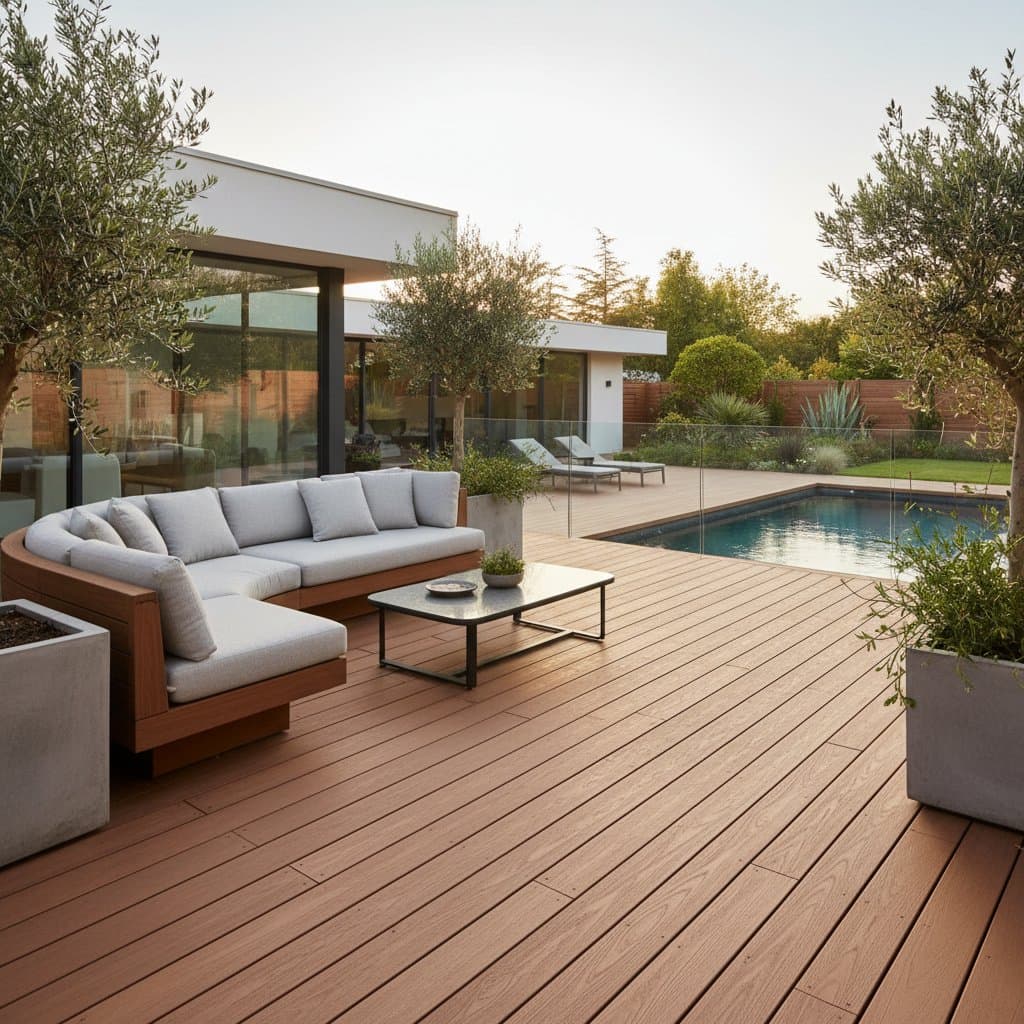
Recycled Plastic Decking: A Revolution Arrives in 2026
Homeowners envision ideal backyards as serene retreats for gatherings, free from ongoing upkeep like sealing or sanding. Recycled plastic decking innovations, set to emerge prominently in 2026, will elevate this ideal through enhanced durability, sustainability, and visual appeal.
Essential Advantages
- Recycled plastic lumber will lead in new decking installations, driven by its robust durability and positive environmental impact.
- Advanced formulations incorporate more than 90 percent post-consumer plastics, thereby reducing landfill contributions substantially.
- Over a decade, total ownership costs may decrease by 25 to 30 percent relative to conventional wood decks.
- Developers are creating surface textures and finishes that closely resemble natural wood grains.
Advanced Technology in Recycled Plastic Lumber
This emerging class of recycled decking materials extends beyond environmental advocacy; it represents a leap in engineering. Producers have perfected polymer blending processes to bolster structural strength and maintain color vibrancy over extended periods. Enhanced composites now withstand dimensional changes from temperature fluctuations, addressing limitations observed in prior iterations.
The following comparison highlights the evolution:
| Feature | Traditional Wood | Recycled Plastic Lumber |
|---|---|---|
| Average Lifespan | 10-15 years | 30+ years |
| Maintenance | Annual sealing or staining | Occasional cleaning only |
| Moisture Resistance | Moderate | High |
| Recycled Content | 0% | Up to 95% |
Such metrics explain the growing interest from architects, builders, and homeowners in recycled decking solutions. The material's strength-to-weight balance matches that of hardwoods, while its minimal water uptake prevents issues like swelling or cracking.
Tangible Advantages for Property Owners
Initial expenses for recycled plastic decking may exceed those of pressure-treated wood by 15 to 20 percent. However, the financial benefits become evident over time. Industry sustainability experts project a return on investment exceeding 120 percent, factoring in diminished maintenance and replacement needs throughout the material's lifespan.
Aesthetically, these decks appeal through innovative surface embossing that mimics wood patterns with remarkable accuracy, often deceiving even trained eyes. The inherent stain resistance simplifies cleanup from spills, and the absence of organic components inhibits mold development.
Installation advancements further enhance usability. Systems with concealed fasteners and factory-applied finishes accelerate construction and yield contemporary profiles. These attributes position recycled plastic decks as both sustainable and architecturally sophisticated options.
Selecting and Implementing Recycled Plastic Decking
For those considering a new deck or an upgrade to an existing structure, assess recycled plastic alternatives without delay. Begin by reviewing vendors that certify recycled content levels and supply independent verification of performance standards.
DIY projects benefit from modular kits designed for straightforward assembly using basic tools. Larger endeavors require contractors experienced in composite materials to guarantee accurate placement and enduring stability.
Evaluate local climate conditions to select formulations optimized for regional weather patterns, such as UV protection in sunny areas or enhanced flexibility in freeze-prone zones. Consult product warranties, which often extend 25 years or more, to confirm coverage against fading or structural failure.
As sustainable building practices gain momentum, recycled plastic lumber emerges as a viable, visually compelling, and forward-thinking selection. Opting for this material in upcoming outdoor enhancements supports enduring value and environmental stewardship.