Recycled Glass: Transforming Kitchens Sustainably in 2026
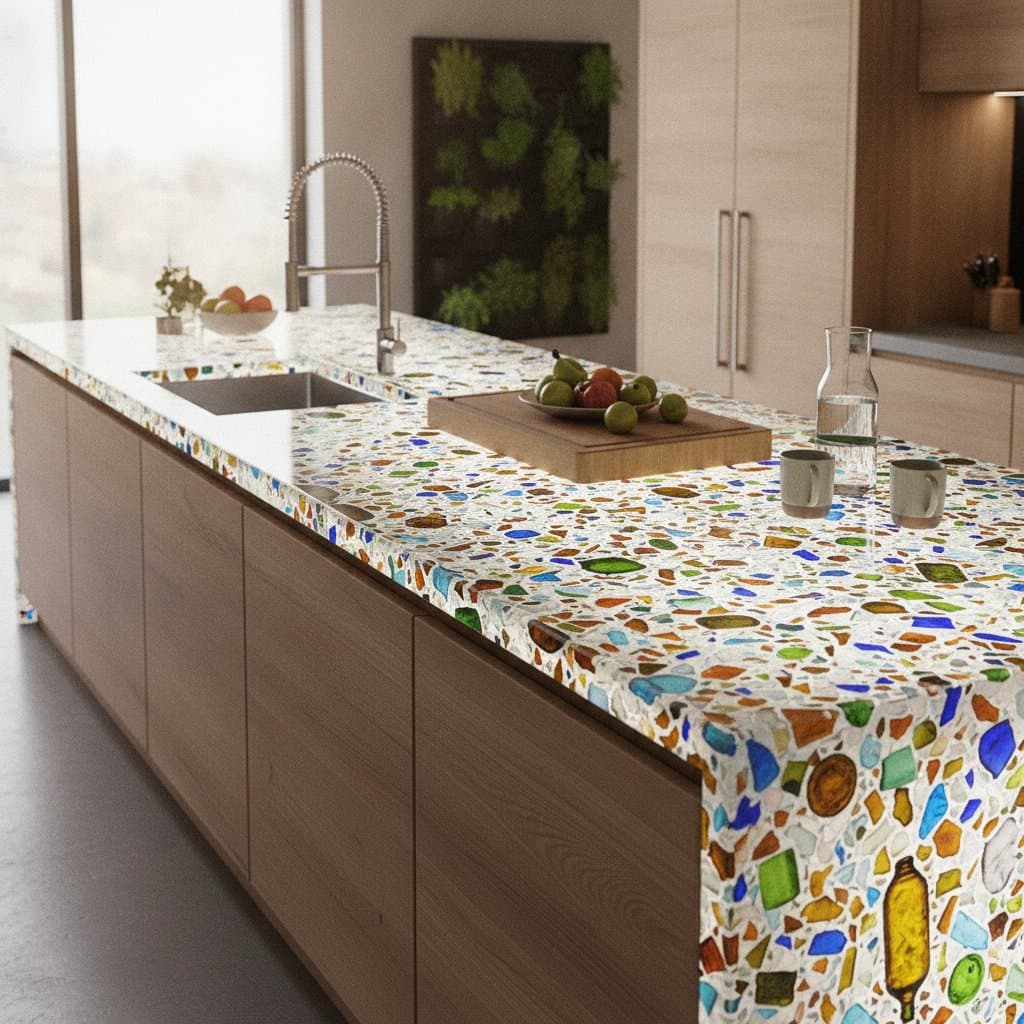
Modern kitchens increasingly prioritize both aesthetics and environmental responsibility. Recycled glass countertops emerge as a standout choice, offering a terrazzo-like sparkle that endures rigorous use while diverting substantial waste from landfills. This material embodies a broader movement toward circular economy principles, where repurposed resources deliver performance without compromising planetary health.
Essential Benefits of Recycled Glass Countertops
- These countertops incorporate up to 85 percent post-consumer glass, which diverts waste and preserves virgin resources.
- Their non-porous composition resists stains, bacteria, and moisture effectively.
- Pricing typically falls between $50 and $100 per square foot, influenced by brand, customization, and installation complexity.
- With routine maintenance, they maintain integrity for over 20 years, providing exceptional return on investment.
- Manufacturing demands significantly less energy compared to quarried stone, thereby reducing the overall carbon emissions associated with kitchen renovations.
The Rising Appeal of Recycled Glass in Design
Homeowners now seek materials that align with genuine sustainability goals beyond superficial green claims. Unlike granite or quartz, which rely on resource-intensive extraction and global shipping, recycled glass utilizes readily available post-consumer items like shattered bottles and broken windows. Binders such as resin or cement fuse these fragments into resilient slabs. The Environmental Protection Agency notes that each ton of recycled glass conserves more than one ton of natural resources, underscoring its efficiency.
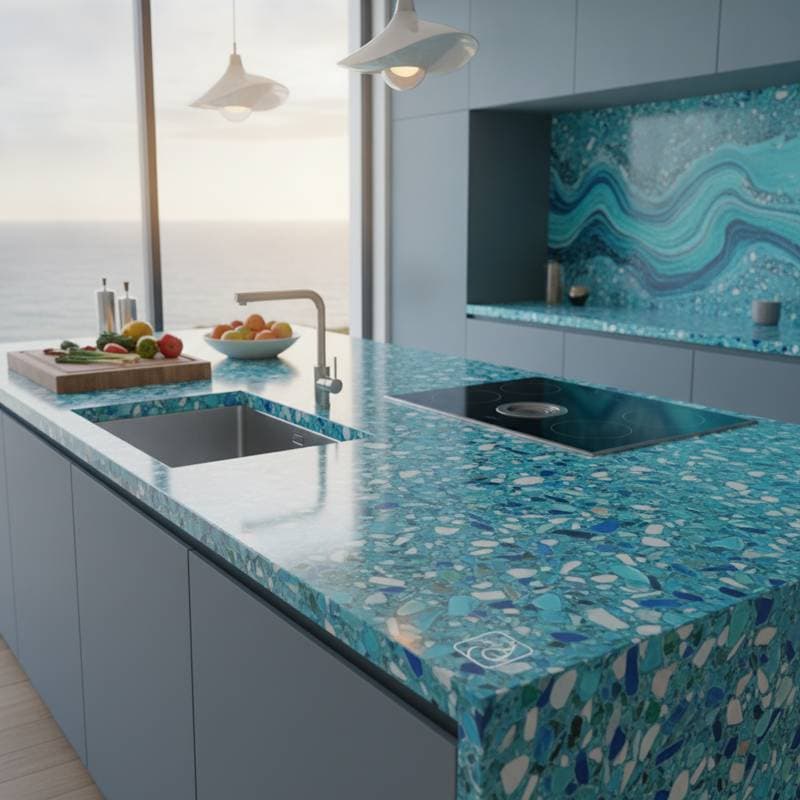
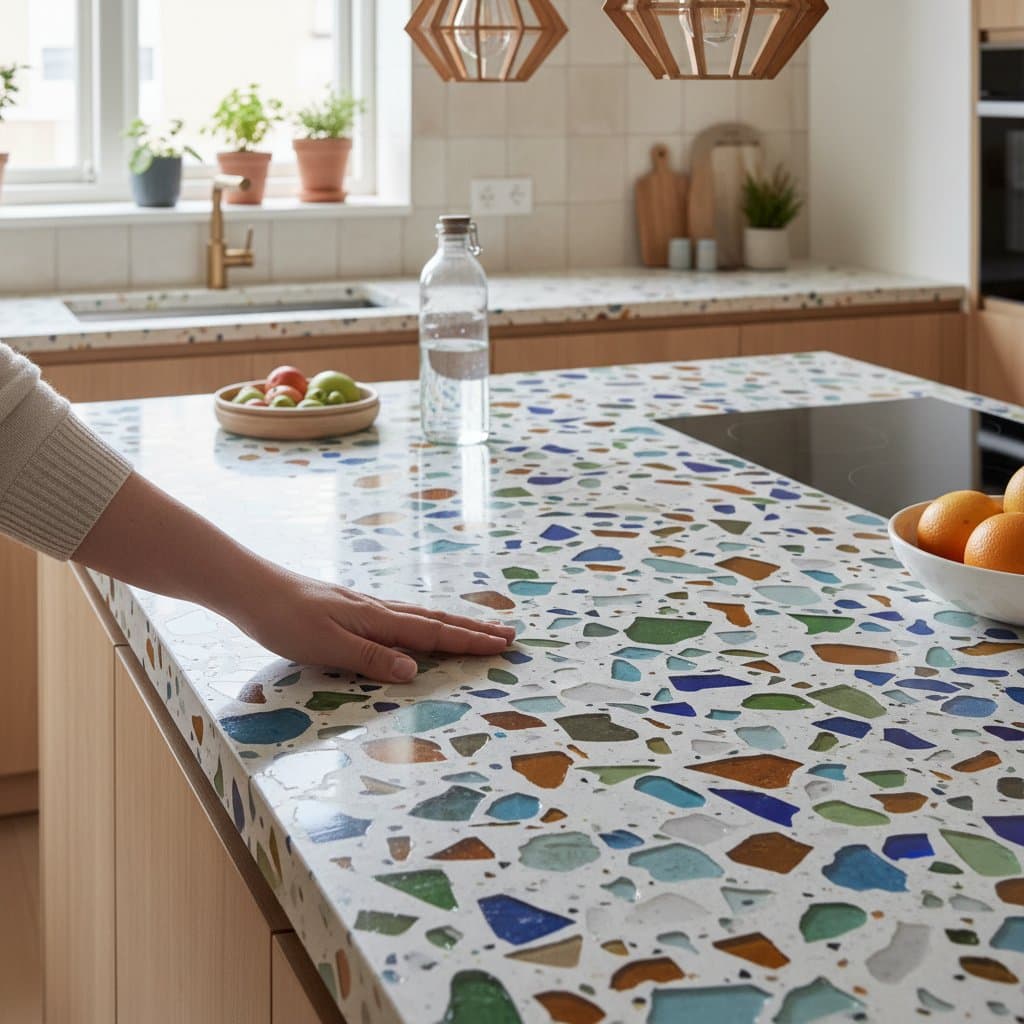
Customization elevates recycled glass beyond functionality into artistry. Visible glass aggregates form intricate patterns, allowing selections from vibrant blues derived from soda bottles to earthy greens from wine glass remnants. This personalization not only crafts a distinctive look but also prevents thousands of pounds of glass from entering landfills annually. Designers value how these slabs integrate seamlessly with contemporary or traditional cabinetry, enhancing visual depth without environmental trade-offs.
Performance Comparison Across Materials
| Feature | Recycled Glass | Granite | Quartz |
|---|---|---|---|
| Composition | 70-85% recycled glass with resin or cement | 100% natural stone | Engineered stone with resin |
| Maintenance | Low; non-porous surface | Requires periodic sealing | Minimal maintenance |
| Heat Resistance | Moderate; resin versions excel | High | Moderate |
| Cost per sq. ft. | $50-$100 | $40-$90 | $60-$120 |
Granite delivers timeless elegance through its natural veining, yet recycled glass matches its durability while easing environmental burdens. The inherent non-porosity of recycled glass eliminates the need for sealants, simplifying upkeep in high-traffic areas. Although cement formulations may risk minor cracks from sudden heat exposure, resin-infused options adapt reliably to everyday thermal fluctuations, such as placing hot pots directly on the surface.
Installation and Maintenance Strategies
Select fabricators experienced in sustainable materials to ensure quality outcomes for your recycled glass project. Request verification of recycled content percentages and eco-certifications during consultations. Installation expenses align closely with those for quartz, often ranging from $30 to $50 per square foot depending on site specifics and edge treatments.
Daily care involves gentle cleansing with mild soap and warm water using a soft cloth, which preserves the surface's luster. Steer clear of harsh abrasives or acidic solutions that might etch the finish over time. In active cooking environments, employ cutting boards to safeguard against scratches from knives or dragged utensils, as even scratch-resistant materials accumulate fine wear with prolonged direct contact.
Advancing Your Kitchen with Recycled Glass
Adopting recycled glass countertops signifies a commitment to enduring sustainability paired with refined design. This choice transforms routine spaces into showcases of innovation, where each slab narrates a tale of resource renewal. Homeowners benefit from surfaces that withstand the demands of family life while aligning personal style with global stewardship, fostering kitchens that inspire both daily function and long-term planetary care.