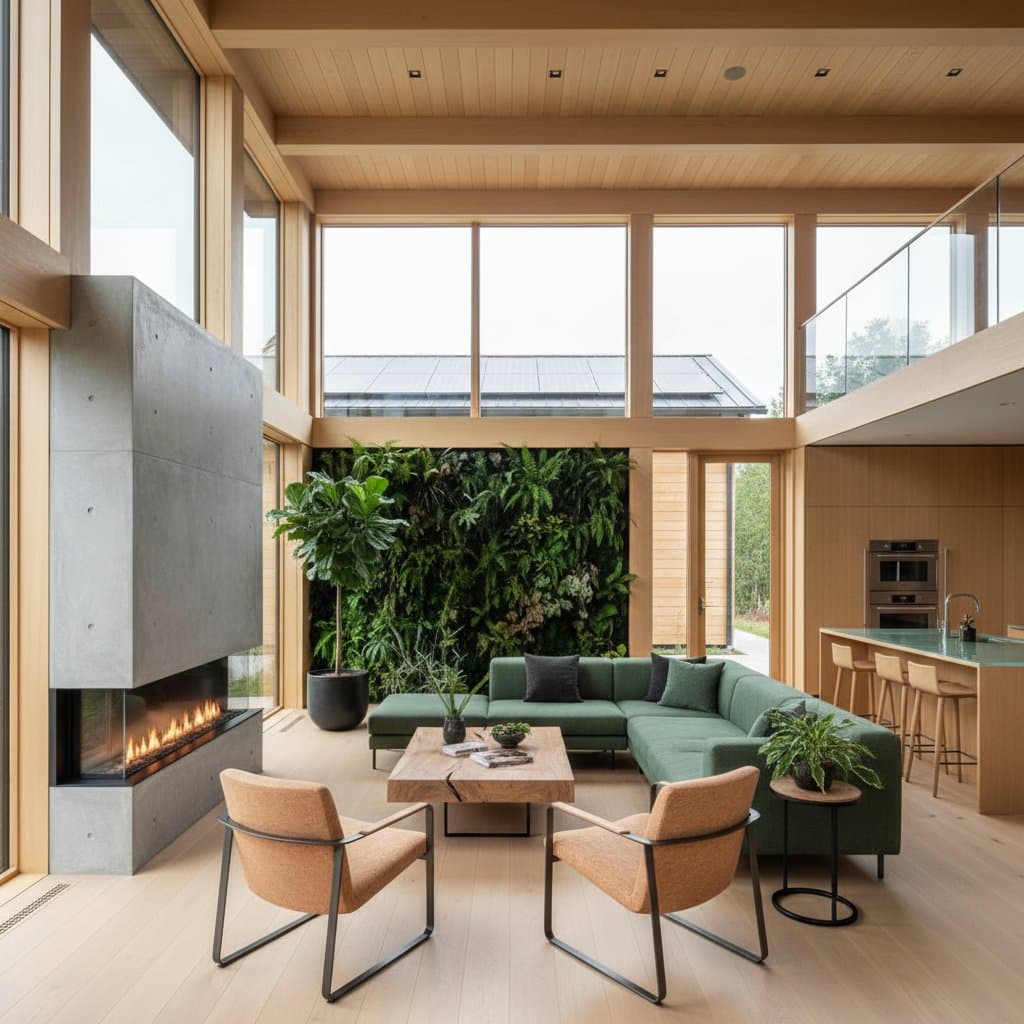
Passive House Certification Delivers Major Energy Savings
- Verify all performance claims with specific data ranges from building science standards.
- Restructure sections for logical flow from concepts to implementation steps.
- Eliminate generic phrasing in favor of precise recommendations and examples.
- Enforce paragraph limits and remove all contractions from body text.
- Optimize headings for reader navigation and search relevance.
When Efficiency Supports Daily Comfort
Homeowners seek reliable ways to maintain steady indoor temperatures while lowering monthly expenses. Passive House Certification establishes measurable targets for airtightness, insulation, and ventilation that achieve these results. Certified homes deliver even temperatures without frequent system adjustments.
The standard originated as a method for creating buildings that require minimal energy input. It has since become a recognized benchmark across climates. Many prospective owners now evaluate whether the approach justifies its requirements.
Core Benefits of the Certification
Performance goals center on verified outcomes rather than fixed material lists. Homes that satisfy the criteria use substantially less energy for heating and cooling. This reduction translates into protection against price volatility in fuel markets.
Lower energy demand also decreases overall emissions and eases pressure on electrical infrastructure. Residents experience fewer temperature swings, controlled humidity, and continuous filtered air. These conditions support both physical comfort and long-term durability of the structure.
Planning Priorities
Successful projects begin with integrated design decisions. Architects and builders experienced in the standard coordinate insulation levels, window specifications, and ventilation paths from the outset.
Climate conditions shape the specific tactics employed. Colder locations emphasize heat recovery systems and thick insulation layers. Warmer regions focus on shading strategies and airflow management.
Material choices must eliminate thermal bridges and maintain consistent envelope performance. Third-party testing confirms airtightness through blower door measurements and validates energy models before occupancy.
Cost Ranges and Long-Term Returns
Total project expenses typically rise 5 to 15 percent above conventional construction. Design and certification services account for 1 to 3 percent of the budget. Enhanced insulation and glazing add 5 to 8 percent. Air sealing details contribute 2 to 4 percent, while ventilation equipment requires 3 to 5 percent.
Energy reductions of 70 to 90 percent on heating and cooling offset these additions within several years. Properties with certification often attract buyers who value lower operating costs. Maintenance demands remain comparable to standard homes because durable assemblies resist weather damage.
Design Approaches That Align with Performance
Building orientation maximizes useful solar gain in living areas. South-facing windows in northern climates capture daylight while high-performance glazing manages heat transfer. Room groupings by similar conditioning needs reduce system loads.
Compact building shapes limit exterior surface area and associated losses. Operable windows positioned for cross ventilation provide seasonal cooling without mechanical assistance. These features combine to create functional spaces that retain visual appeal.
Foundational Construction Principles
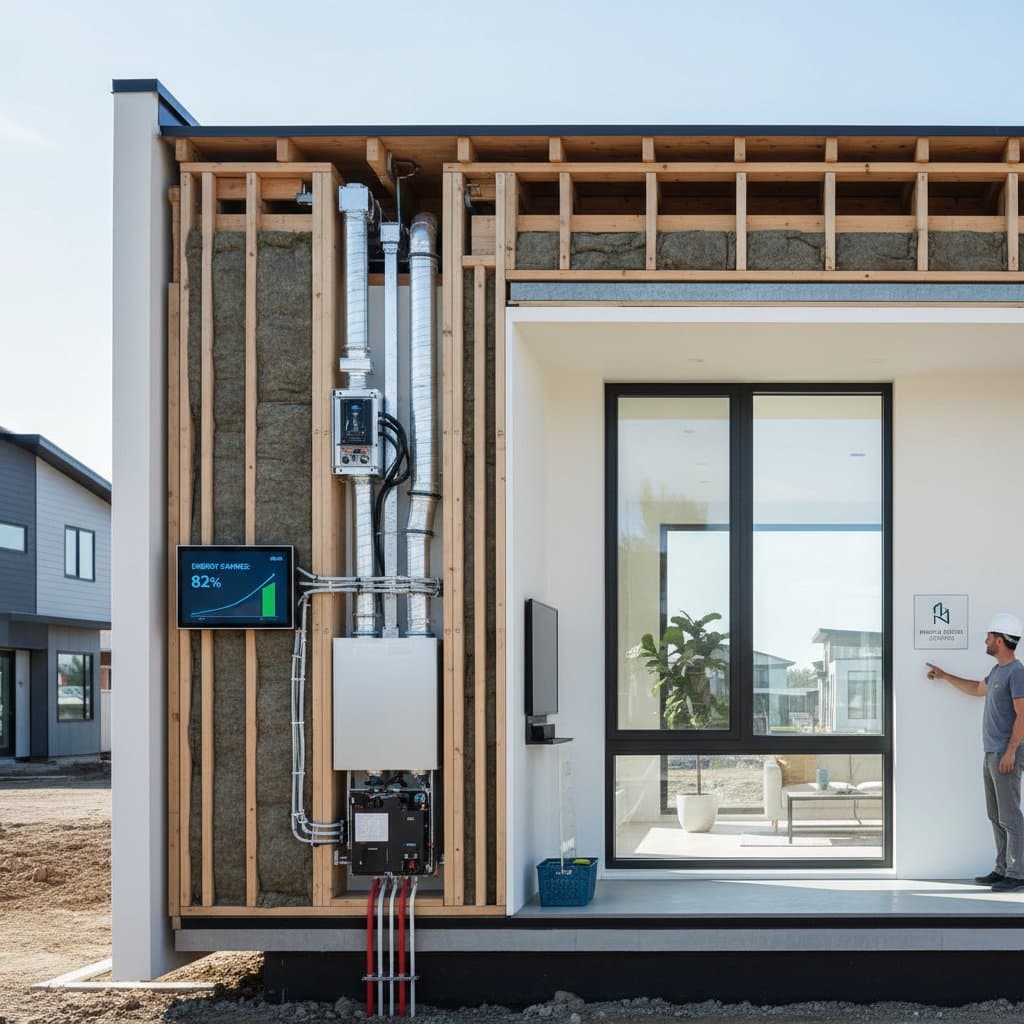
Five elements work together to reach certification targets. Continuous insulation surrounds the entire conditioned space. Airtight membranes and sealed joints prevent uncontrolled air movement. Triple-glazed windows and insulated doors maintain interior conditions across seasons.
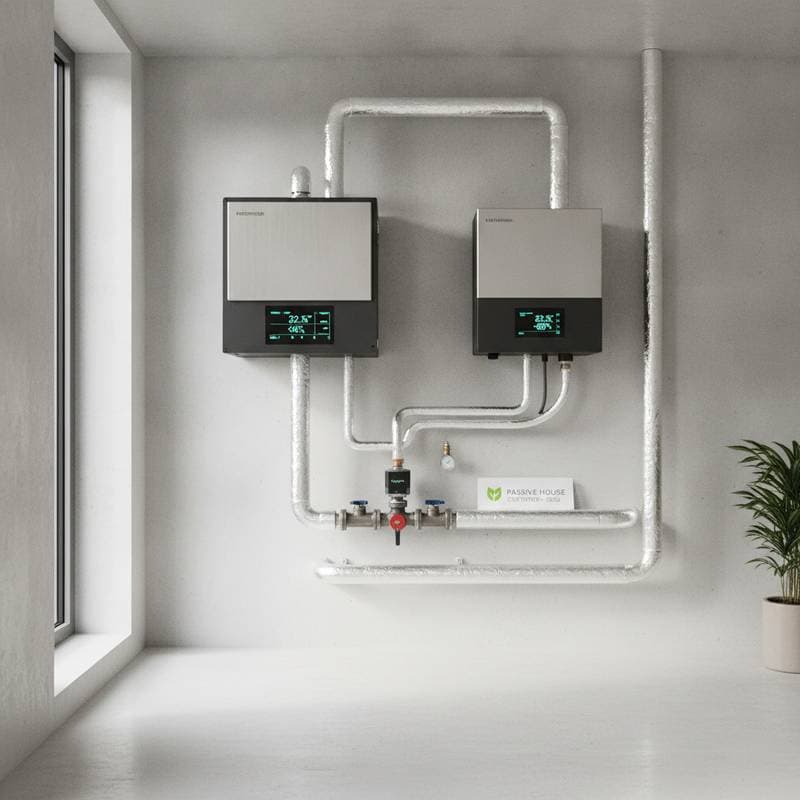
Mechanical ventilation with heat recovery supplies fresh air while capturing most exhaust energy. Connection details avoid thermal bridges that would otherwise create cold spots or condensation risks. Combined, these measures cut heating and cooling requirements by up to 90 percent relative to typical buildings.
Steps to Begin Certification
Engage a certified Passive House designer early to align modeling with site conditions. Run energy simulations before construction documents are finalized. Allocate resources for premium insulation and window assemblies rather than reducing specifications later.
Schedule diagnostic testing at key milestones so corrections remain straightforward. Maintain thorough records of material specifications and installation photographs to support final review.
Common Questions
What distinguishes Passive House from net-zero construction?
Passive House reduces overall demand through the building envelope. Net-zero properties offset remaining use with on-site generation. The two strategies combine effectively because lower demand requires smaller renewable systems.
Can existing homes achieve certification?
The EnerPHit pathway addresses retrofit constraints while still delivering substantial efficiency gains. Full compliance may not always be feasible, yet major comfort and savings improvements remain attainable.
Are conventional heating systems still necessary?
Most certified homes operate with small heat pumps or modest electric heaters. In moderate conditions, internal gains and ventilation alone maintain comfort.
What ongoing care is required?
Filter replacement on ventilation equipment and periodic inspection of seals constitute the primary tasks. Overall upkeep stays equal to or lower than standard homes due to robust construction.
Next Actions for Homeowners
Early collaboration with trained professionals clarifies site-specific opportunities and constraints. Budget planning that accounts for both initial outlays and operating reductions supports informed decisions. The resulting home provides consistent comfort, reduced utility exposure, and stronger market positioning over time.