Mushroom Insulation: The 2025 Breakthrough in Eco-Friendly Energy Efficiency
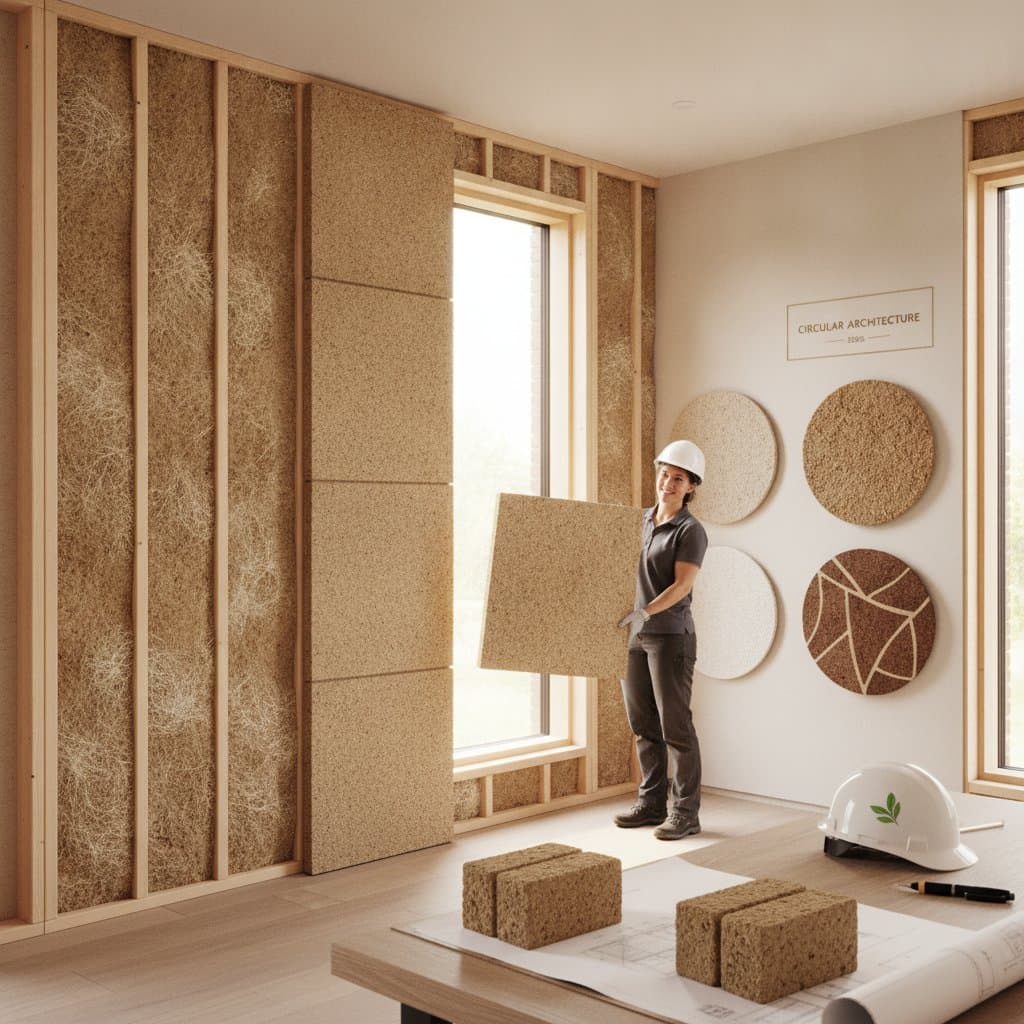
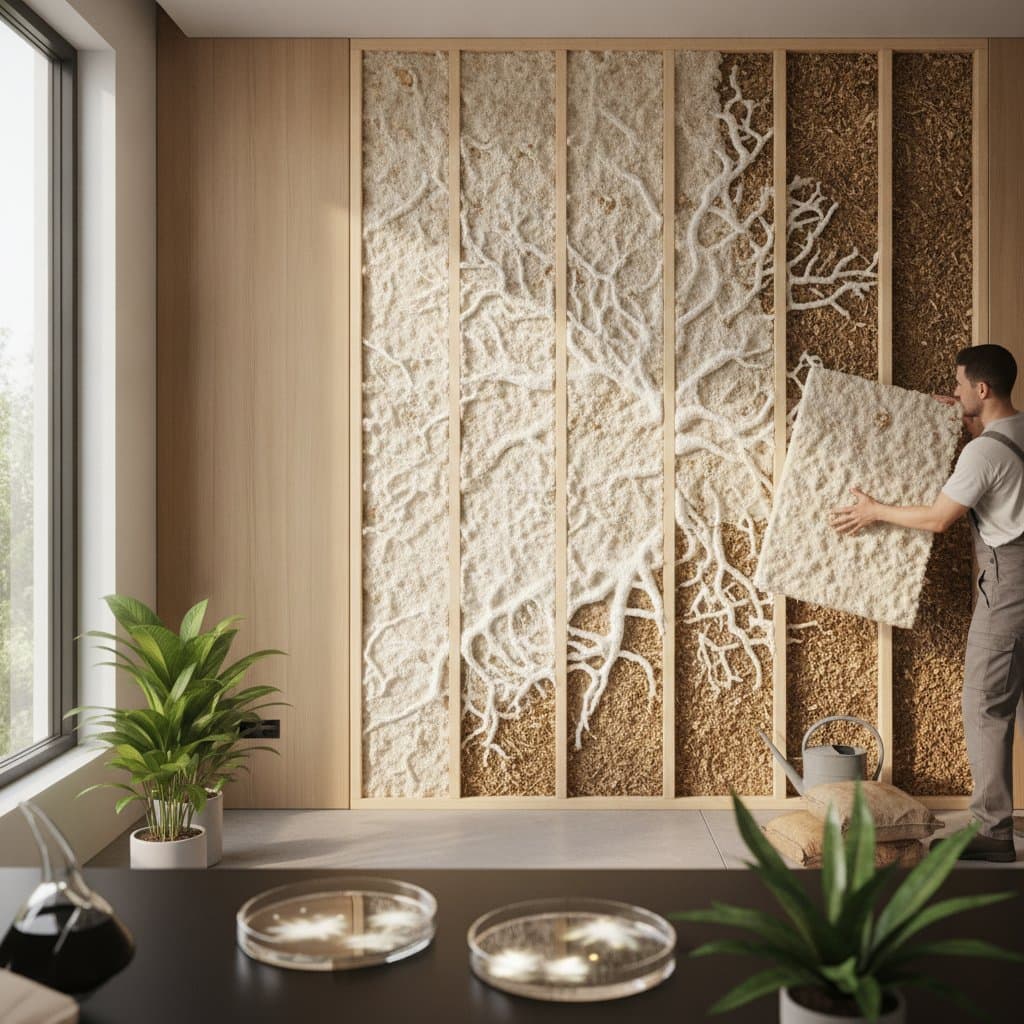
Imagine insulation that grows from natural fungal networks, demands minimal synthetic inputs, and breaks down harmlessly at the end of its service life. Mycelium-based mushroom insulation alters approaches to thermal barriers, environmental responsibility, and economic viability in construction. This material leverages the root-like structure of fungi to create panels or foams that insulate effectively without the drawbacks of synthetic alternatives.
Essential Advantages
- Mycelium insulation lowers heating and cooling expenses by as much as 25 percent relative to standard options.
- The product degrades completely, producing no harmful remnants.
- Manufacturing consumes under one-tenth the energy required for foam or fiberglass production.
- It offers inherent resistance to fire and excellent sound absorption.
- Applications include modular panels for new builds and spray formulations for existing structures.
Performance Comparison with Traditional Insulators
A direct evaluation highlights why mycelium insulation attracts interest from the construction sector. It matches or exceeds the insulation qualities of fiberglass and polyurethane foam while providing superior ecological benefits.
| Property | Mycelium Insulation | Fiberglass | Polyurethane Foam |
|---|---|---|---|
| Thermal Conductivity (W/mK) | 0.03 - 0.04 | 0.04 - 0.05 | 0.03 - 0.04 |
| Density (kg/m³) | 40 - 200 | 12 - 80 | 30 - 60 |
| Fire Resistance | High (chars without melting) | Moderate | Low |
| Biodegradability | 100 percent | None | None |
| Production Energy Use | Very low | Moderate | High |
| End-of-Life Disposal | Compostable | Landfill required | Landfill required |
These metrics demonstrate competitive thermal efficiency alongside unmatched sustainability. Installers note that the material cuts and fits easily on-site, akin to rigid foam boards, which simplifies retrofitting projects.
Broader Environmental and Community Impacts
Mycelium insulation signals a move toward materials that restore rather than deplete resources. Unlike insulators reliant on extracted minerals or petroleum derivatives, this option utilizes farm waste as feedstock, diverting it from landfills.
Environmental data indicate that creating one cubic meter of mycelium insulation generates 85 percent less carbon emissions than an equivalent amount of polyurethane foam. Each unit sequesters carbon from biomass that might otherwise decompose and release greenhouse gases.
Local economies gain from on-site production near agricultural sources, which cuts shipping expenses and fosters closed-loop systems. The straightforward growth and processing methods enable small-scale operations, promoting widespread, community-based manufacturing.
Emerging Market Dynamics and Innovations
Design professionals and researchers pursue enhancements in longevity and production volume. Ongoing studies address moisture tolerance and integrate mycelium with recycled fibers like cellulose or hemp to boost structural integrity.
Public and nonprofit funding supports demonstrations of full-scale implementation. Results from these initiatives confirm energy reductions of up to 25 percent in insulated buildings, rivaling high-end synthetics but with reduced ecological harm.
Beyond thermal control, the material excels in noise mitigation, absorbing key sound ranges effectively. This feature suits dense urban residences, recording studios, and workplaces, where quieter environments enhance well-being and efficiency.
Evaluating Costs and Long-Term Value
As commercial availability increases, mycelium insulation prices align closely with established products. Initial costs range 10 to 20 percent above fiberglass, yet energy efficiencies and lifecycle savings recoup the difference rapidly.
Sample Cost Analysis
| Item | Cost per Square Meter (Approximate) | Expected Lifespan | Key Considerations |
|---|---|---|---|
| Mycelium Insulation | Moderate | 50+ years | Fully compostable; minimal upkeep |
| Fiberglass | Lower | 30-40 years | Installation demands protective equipment |
| Polyurethane Foam | Higher | 40-50 years | Involves off-gassing risks; non-recyclable |
Incorporating rebates for sustainable builds and avoided waste fees accelerates return on investment compared to conventional choices.
Overcoming Hurdles and Seizing Potential
Scaling production poses the primary obstacle, as uniform growth demands precise humidity and temperature management. Investigations into resilience against dampness and insects yield promising coatings that maintain performance.
Awareness gaps among contractors and homeowners hinder progress, necessitating demonstrations and endorsements from regulatory bodies. Standardized certifications will accelerate integration into mainstream practices.
The momentum builds as bio-materials gain traction in construction. Mycelium insulation distinguishes itself through balanced efficacy, eco-credentials, and adaptable forms, paving the way for greener built environments.
Advancing Sustainable Homes Through Fungal Innovation
Adopting mycelium insulation equips builders and homeowners to achieve substantial energy savings while supporting planetary health. This technology not only trims utility costs but also contributes to resilient, low-impact structures. As production matures, its role in everyday construction expands, fostering a network of efficient, earth-friendly dwellings.