Why Mycelium Insulation Is the Future of Green Homes
When you imagine the home of the future, you might picture solar panels, smart thermostats, or rainwater collection systems. One of the most revolutionary materials reshaping sustainable construction comes from fungi. Mycelium insulation, grown rather than manufactured, changes how builders and homeowners think about wall materials.
Key Benefits
- Mycelium insulation cuts embodied carbon emissions by up to 80 percent compared to conventional foam or fiberglass.
- It resists fire and pests without toxic chemicals.
- Production uses minimal energy, water, and time because the material grows into shape.
- Panels are fully compostable at end of life, creating a closed loop system.
- Builders integrate mycelium insulation into existing wall systems without major design changes.
What Mycelium Is
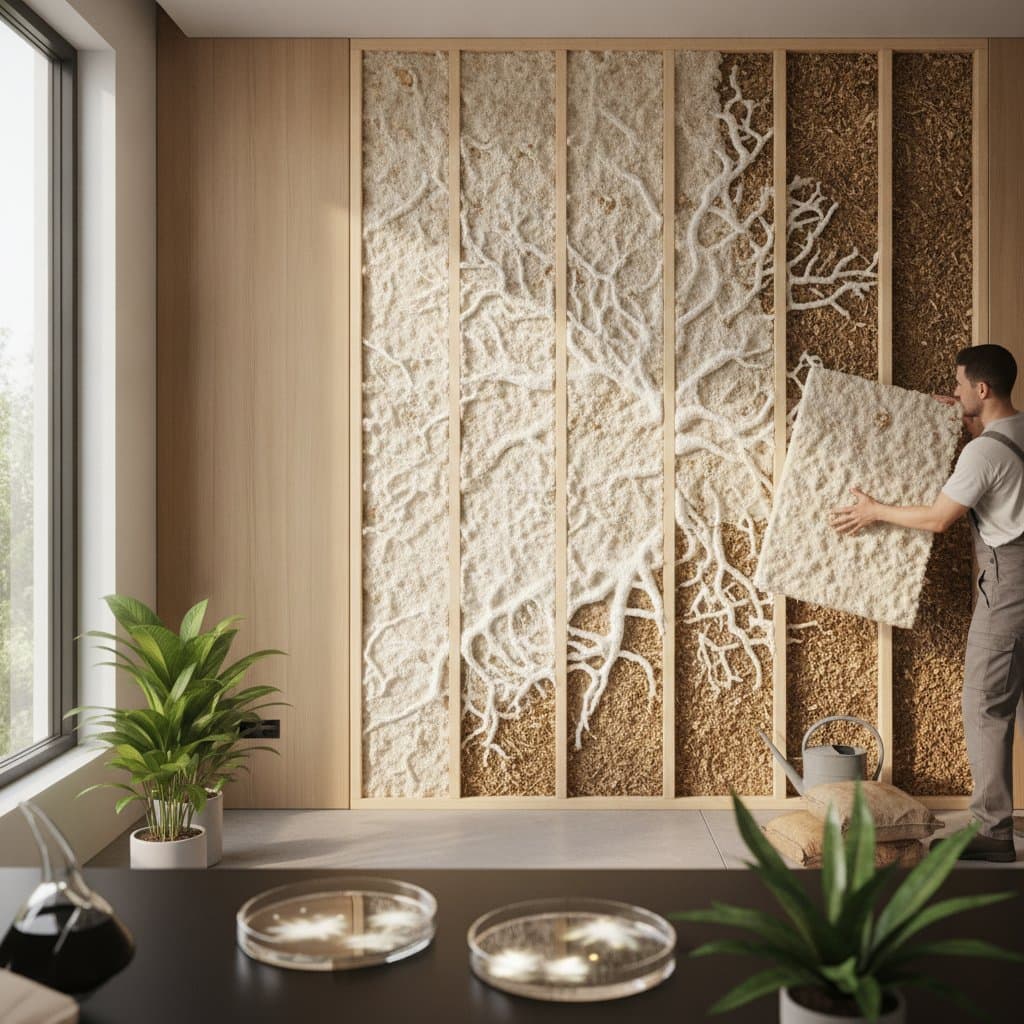
Mycelium forms the root like network of fungi beneath forest floors. It breaks down organic matter into nutrients. When grown under controlled conditions with agricultural waste, mycelium creates dense, lightweight structures that replace petroleum based materials.
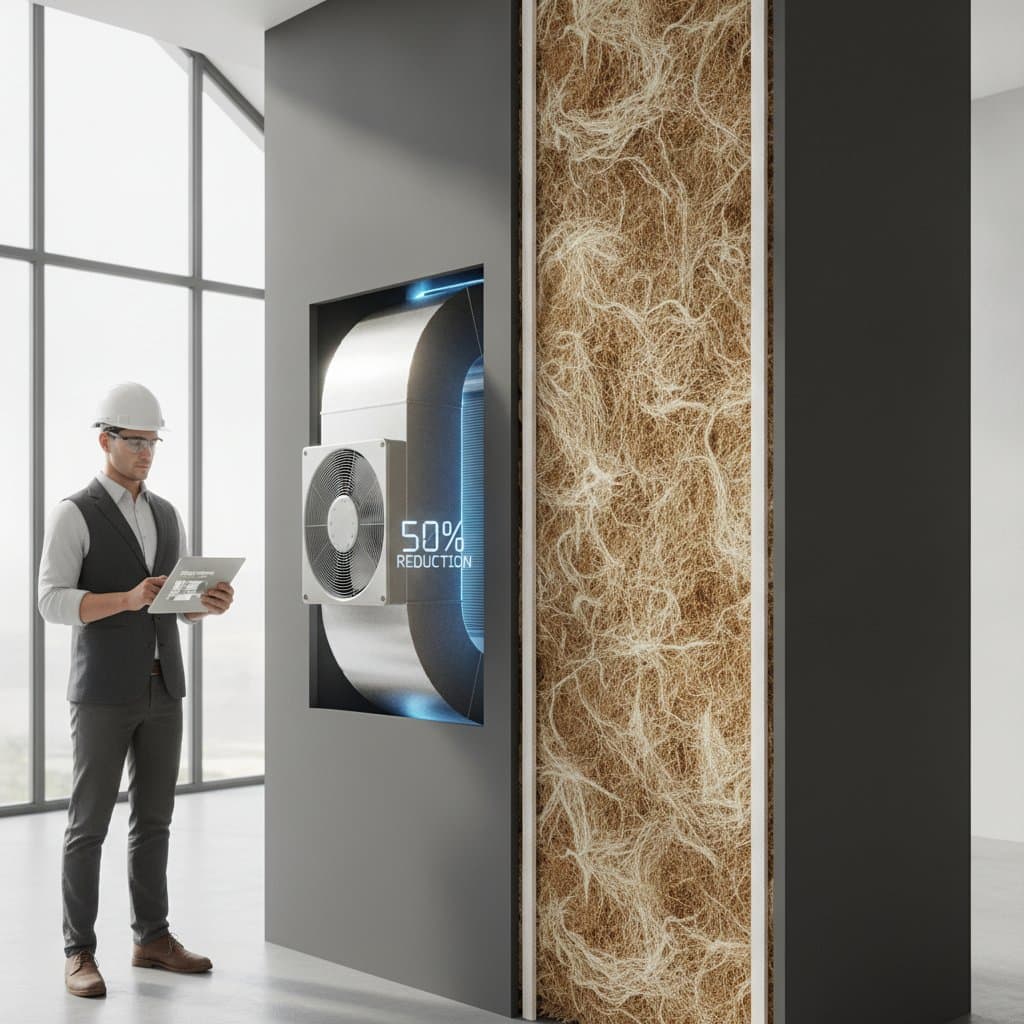
Growers feed mycelium with chopped straw, corn husks, or sawdust. In a few days the fungal threads bind the substrate into a solid mass. Heat treatment stops growth and locks the structure. The result is a durable, breathable, biodegradable panel.
Comparison to Conventional Materials
Conventional options like fiberglass, polystyrene, and polyurethane foam rely on energy intensive processes. They release volatile compounds and add to landfill waste. Mycelium follows a growth model instead of extraction.
| Material Type | Typical R Value per Inch | Embodied Carbon (kg CO2e per m3) | End of Life Disposal |
|---|---|---|---|
| Fiberglass | 2.9 to 3.8 | 40 to 45 | Landfill or recycling challenges |
| Polystyrene Foam | 4.0 to 5.0 | 60 to 70 | Non biodegradable |
| Polyurethane Foam | 5.5 to 6.5 | 75 to 90 | Non biodegradable |
| Mycelium | 3.0 to 3.7 | 10 to 15 | Fully compostable |
Mycelium R value is comparable while environmental performance exceeds other options. Growth occurs at room temperature with agricultural by products, keeping the process nearly waste free.
Thermal Performance
Mycelium traps air pockets that slow heat transfer. The structure regulates humidity by absorbing and releasing moisture without loss of capacity. This suits climates where condensation and mold are concerns.
Research shows mycelium maintains stable performance when humidity fluctuates. Fiberglass can lose up to 30 percent effectiveness when damp. Natural breathability improves indoor air quality by reducing trapped moisture.
Fire, Pest, and Mold Resistance
Mycelium chars instead of igniting when exposed to heat. Tests confirm panels withstand direct flame longer than many synthetic foams. Heat treatment removes live spores so termites and rodents avoid the material. Slightly acidic pH prevents mold growth.
Environmental and Economic Benefits
Mycelium supports regenerative agriculture by valuing crop waste. Each cubic meter sequesters roughly 15 kilograms of carbon. Lightweight panels lower transportation energy.
Production costs fall as techniques scale. Pilot projects show up to 20 percent lower total installation costs from reduced waste and simpler disposal.
Return on Investment
- Energy savings match fiberglass performance and cut heating and cooling costs by 10 to 15 percent.
- Expected lifespan reaches 30 to 50 years without performance loss.
- Full compostability avoids landfill fees.
These factors can deliver 120 to 150 percent return over a typical home lifespan.
Practical Use for Builders and Homeowners
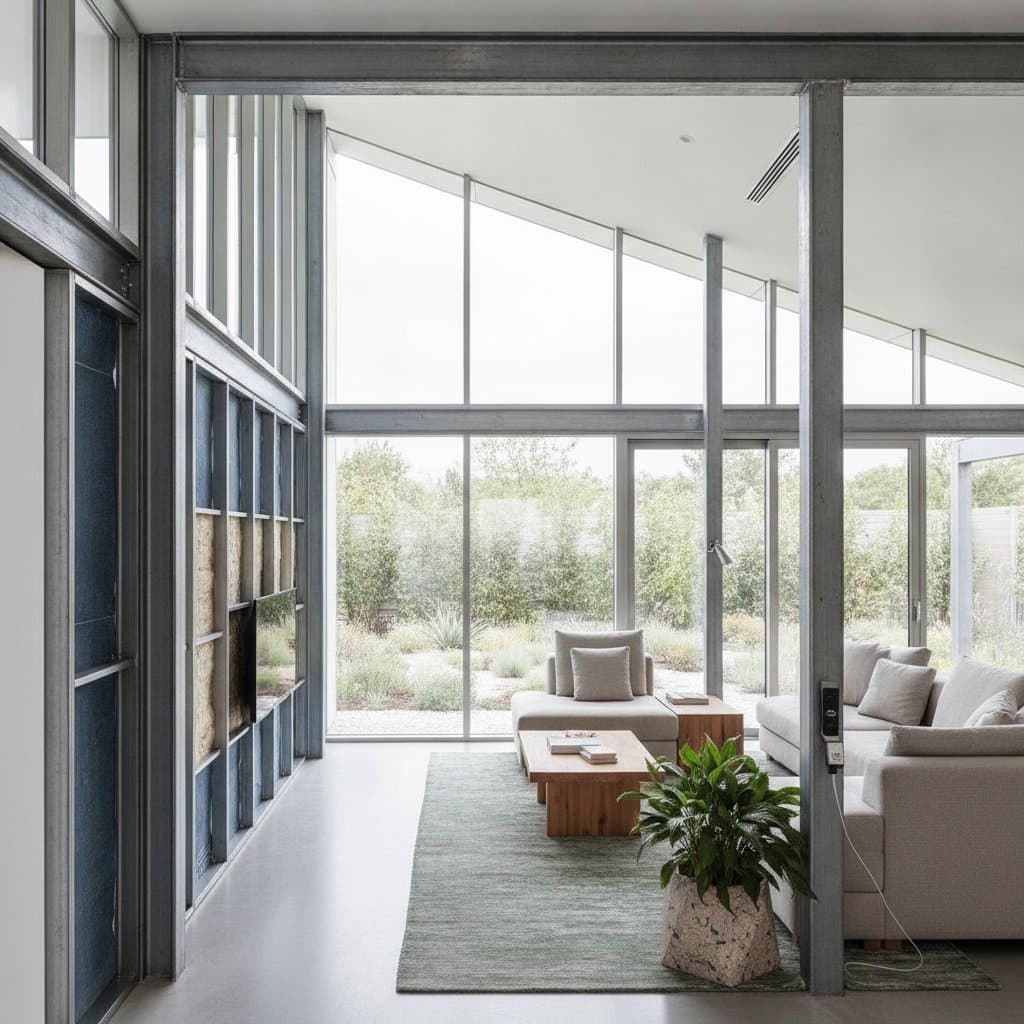
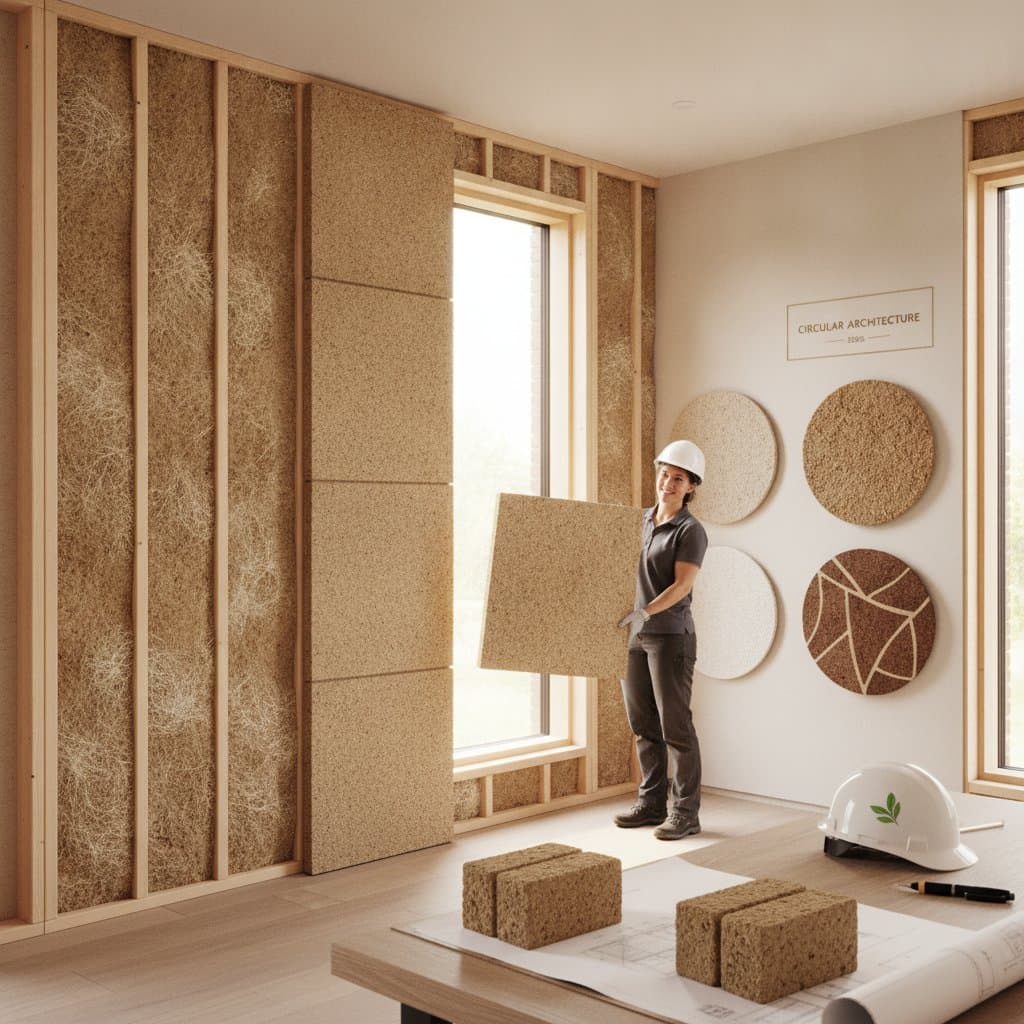
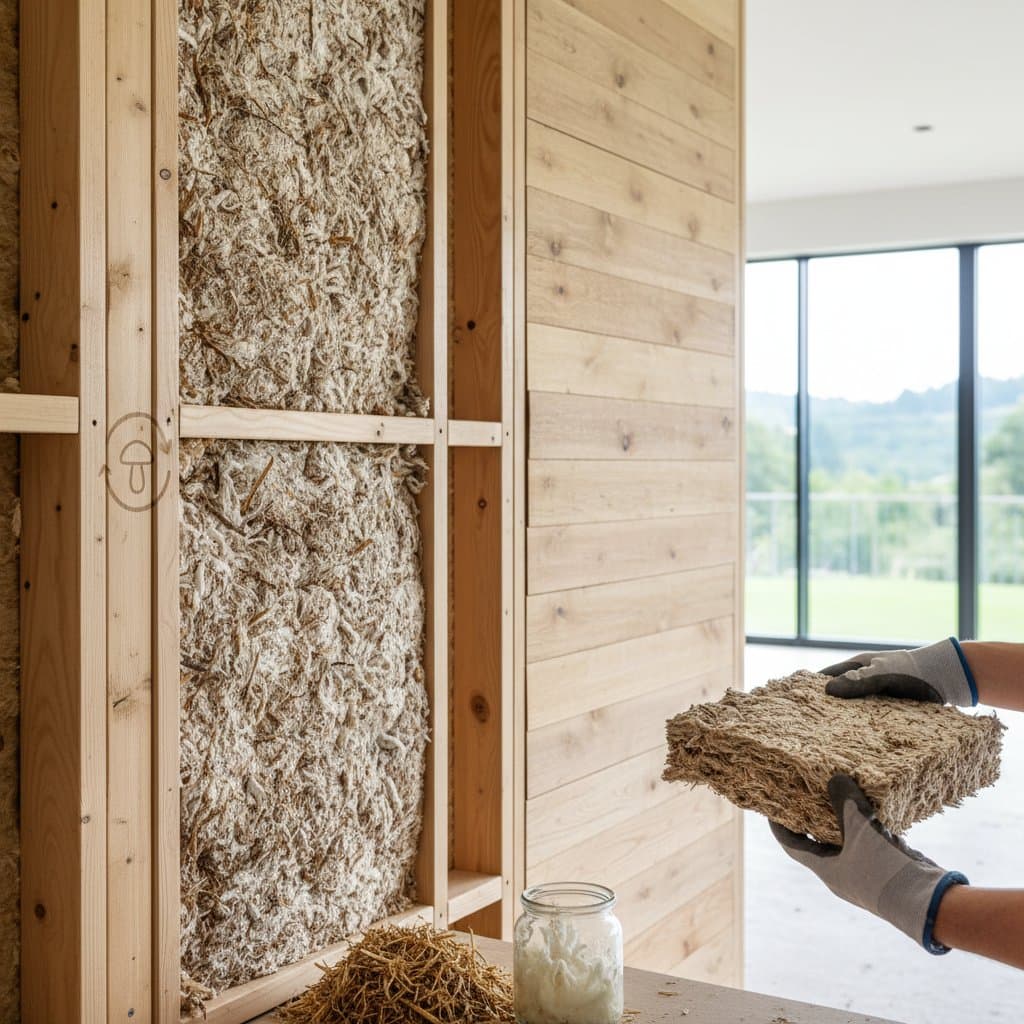
Use mycelium panels in wall cavities, roofs, and floors. Standard sizes fit wood framing or custom molds. Installation follows rigid foam methods without special tools.
Pair panels with proper vapor barriers in high humidity areas. Maintenance stays minimal while breathability stabilizes indoor conditions.
Expert Views on Future Use
Architects view mycelium as part of a shift to bio based systems. Researchers describe it as a change from extraction to cultivation. Early projects show clients value the material story and environmental connection. Certification systems are expected to award credits for carbon neutral and circular design.
Current Challenges
Large scale production needs consistent conditions for uniform density. Storage must prevent moisture uptake before installation. Researchers test hybrid blends with hemp or flax to raise R values. Regional production hubs are advancing commercial availability.
Next Steps for Projects
Consult sustainable suppliers for certified panels when planning a green build or retrofit. Builders gain higher sustainability ratings and stronger client appeal. Homeowners gain materials that return to the earth. Mycelium insulation demonstrates that effective solutions often originate in natural growth processes.